Product Engineering
Should You Replace Tally with a Manufacturing ERP?
Tally may still be enough for your accounts. The real question is whether your production, inventory, purchase, warehouse, and dispatch teams have outgrown the current setup.
Your accounts may be under control in Tally, while your shop floor runs on Excel, WhatsApp, phone calls, and memory. That setup can work for a while. It starts to hurt when stock, production, purchase, and dispatch teams stop seeing the same picture.
For many Indian MSME manufacturers, the question is not whether Tally is good or bad. The better question is whether your current operating model has become too complex for accounting software alone.
Tally may be enough when the workflow is simple
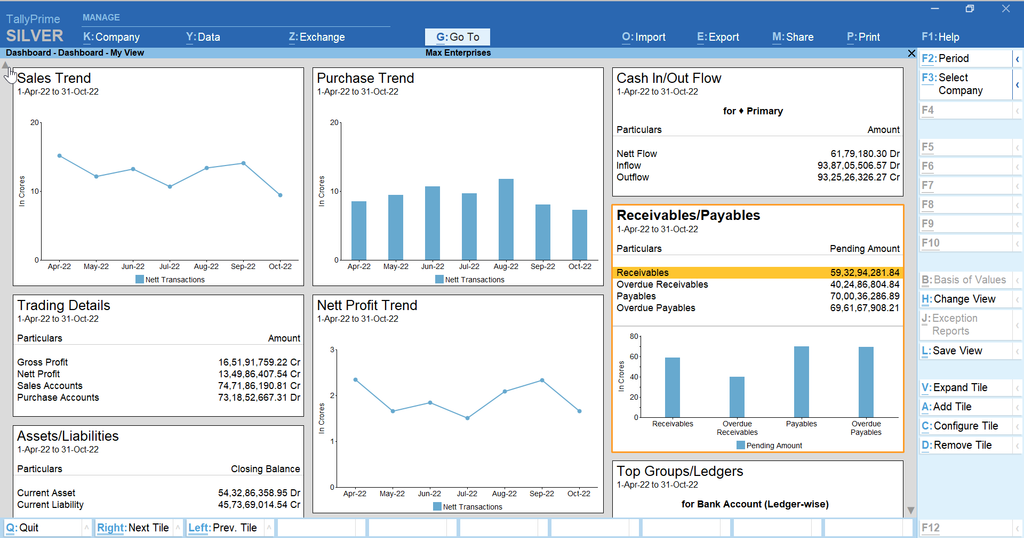
Tally is primarily an accounting and business management solution. If your main requirement is bookkeeping, invoicing, payables, receivables, tax records, and basic stock entries, it may continue to serve you well.
It is also often enough when the plant has a simple flow. You buy material, make a limited range of finished goods, keep stock at one location, and do not need detailed production visibility during the day. In that case, adding a full manufacturing ERP may create more work than value.
You can usually continue with Tally when stock movements are few, bills of materials are simple, and the finance team is the main system user. Some manufacturers can also manage with Tally plus disciplined spreadsheets, if the volume is low and the team updates them without delay.
Accounting Software and Manufacturing ERP Solve Different Problems
Accounting software records financial outcomes. A manufacturing ERP records and controls operational flow before those outcomes reach accounts.
That difference matters. A purchase bill in accounting tells you what was bought. An operational system can show who requested the material, which supplier was selected, whether the purchase order was approved, when goods arrived, which warehouse received them, which batch or heat number they belong to, and which production order consumed them.
For a steel, fabrication, engineering, machinery, or auto components business, those details are not administrative extras. They affect whether the next order can be produced, whether the right raw material is available, and whether dispatch can commit a date to the customer.
Where Tally starts falling short on the floor
The first signs usually appear in inventory. The finance team sees one stock position, the storekeeper sees another, and production behaves according to what is physically available. The gap may be small at first. Over time, it creates wrong purchase decisions, delayed jobs, and manual reconciliation at month end.
Raw material tracking is another pressure point. Many manufacturers need to track material by grade, size, batch, coil, heat number, lot, or customer allocation. If these details live in remarks fields, spreadsheets, or WhatsApp messages, they are hard to search and harder to trust.
Bills of materials create the next layer of difficulty. A BOM is not just a list of components. It connects sales demand to material requirement, purchase planning, production issue, expected output, scrap, rework, and costing. If BOMs are outside the core system, teams make decisions from different versions of the truth.
Production planning also becomes harder as orders increase. A finance system can record sales and purchases, but production needs to know what to make, when to make it, what material is short, which machine or process is next, and where the job is stuck.
The fragmented setup is often the real problem
Many manufacturers do not outgrow Tally in one step. They outgrow the collection of tools around it. Purchase orders are in one file. Stock is in another. Production planning is on a whiteboard. Dispatch updates are sent in a group chat. Finance receives the final documents later.
This fragmentation is the same pattern that causes many digitization efforts to fail. Technology is added, but the flow of work is not redesigned. We have written about this problem in why supply chain digitization still fails despite technology investments.
The result is not only extra data entry. It is weak control.
A purchase team may order material without seeing pending stock. A production manager may start a job without knowing that one component is short. A warehouse team may dispatch against an old instruction. Finance then spends time explaining differences instead of using the numbers to guide decisions.
Integration can be the right middle step
Replacing Tally is not automatically necessary. In many cases, the better option is to keep Tally for accounting and connect it with an operational system that handles procurement, inventory, production, warehouse, and dispatch.
This approach can work when finance is comfortable with Tally, statutory reporting processes are stable, and the operational gap is outside accounts. The operational system becomes the source for stock movement, order status, material issue, production updates, and dispatch records. Tally receives the accounting entries or summaries that finance needs.
The integration must be planned carefully. If item masters, customer masters, supplier masters, and units of measure are not cleaned up, the same confusion moves from spreadsheets into software. Warehouse processes also need attention, especially if goods move through multiple stores, racks, stages, or dispatch areas. The same discipline applies to WMS projects, which is why common WMS implementation challenges are worth reviewing before you start.
A manufacturing ERP makes sense when operations need one system
A full manufacturing ERP becomes practical when operational coordination is now the main bottleneck. This often happens when you have multiple locations, many SKUs, custom jobs, repeat production, subcontracting, strict dispatch commitments, or frequent stock disputes.
A manufacturing ERP can connect procurement, inventory, BOM, material requirements, production tracking, warehouse operations, sales orders, and dispatch. The goal is not to replace human judgment. The goal is to give each department the same current information before decisions are made.
- – Stock accuracy is difficult to trust without physical checks.
- – Raw material traceability depends on manual notes or memory.
- – BOMs and process steps are maintained outside the main system.
- – Purchase planning happens after shortages are already visible.
- – Production status is known only after calling the floor.
- – Sales, dispatch, and finance work from different order updates.
- – Management reports are delayed because data must be combined manually.
If several of these are true, the cost of staying with the current setup may already be showing up in delays, excess purchase, missed commitments, and staff time spent reconciling data.
What to ask before you migrate?
Before choosing any ERP, map your current process from inquiry to dispatch. Follow one real order. See where data is created, where it is copied, where approvals happen, and where people depend on calls or messages.
Then ask practical questions. Do you need live stock by location, grade, batch, or size? Or BOM-driven material planning? Do purchase orders and sales orders need approval flows? Warehouses need bin, rack, or stage tracking? Do plant heads need daily production dashboards? Do finance entries need to flow into Tally or another accounting system?
Also look at implementation effort. ERP cost is not only license or development cost. Your team must clean masters, define roles, migrate opening stock, train users, and agree on new operating rules. If those rules are unclear, software will expose the confusion rather than fix it.
Reporting is another test. If management can wait for weekly or monthly reports, a lighter system may be enough. If production, purchase, sales, and dispatch decisions need current data during the day, the case for ERP becomes stronger. For manufacturers considering analytics on top of ERP, how AI and analytics are changing ERP for manufacturing companies in India gives useful context.
Where ERPKaro fits in this decision?
ERPKaro is a manufacturing and supply chain ERP developed by TheCodeWork for Indian MSME manufacturers. It is built around procurement, purchase and sales orders, inventory, warehouse management, BOM, MRP, production tracking, dispatch, and operational dashboards.
That does not mean every manufacturer should replace Tally immediately. For some businesses, ERPKaro can sit beside the accounting system and manage operations. For others, a broader ERP rollout may make sense when the business wants procurement, inventory, production, warehouse, and dispatch in one system of record.
If you are evaluating this move, start with a process review, not a product demo. List the gaps that cost your team time every week. Separate accounting needs from operational needs. Then compare the cost of implementation with the cost of continuing with scattered data.